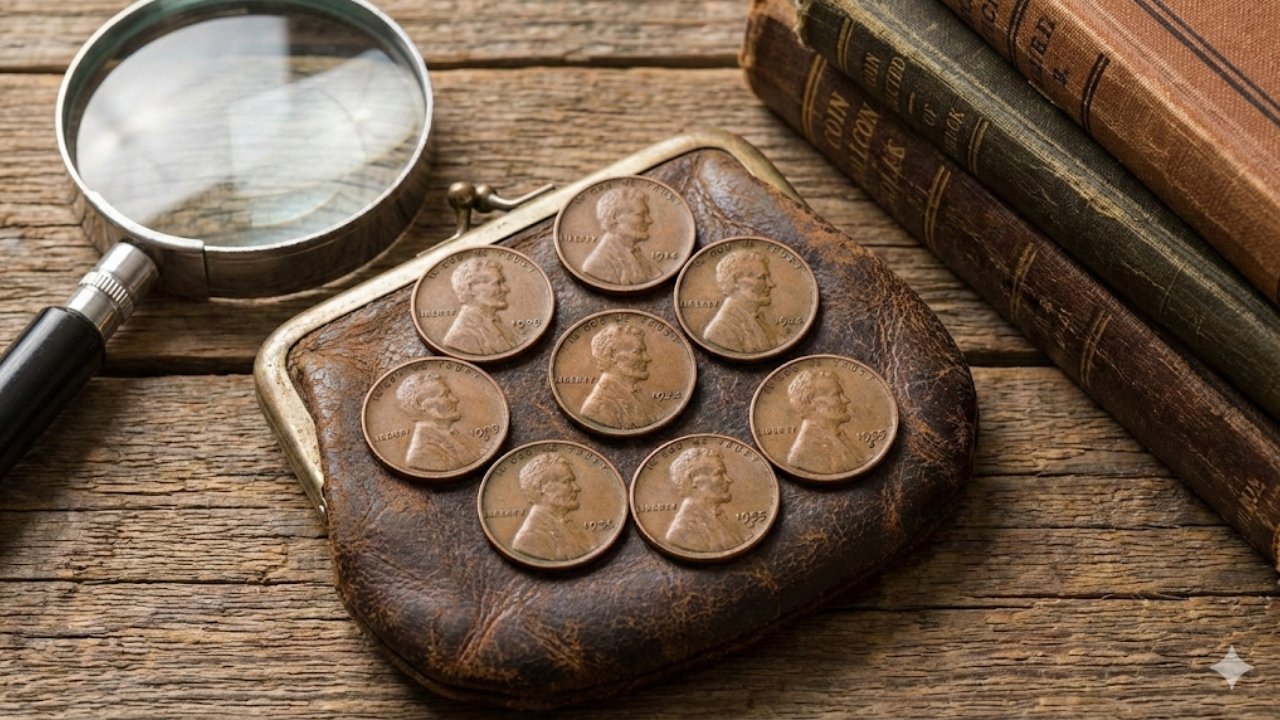

Ever flipped through a jar of old coins and wondered if one might be a small fortune? Wheat pennies, those classic one-cent pieces with Abraham Lincoln’s profile and stalks of wheat on the reverse, were minted from 1909 to 1958. Among the billions produced, a handful stand out as ultra-rare errors or low-mintage gems that collectors chase relentlessly. These nine treasures could turn pocket change into thousands—or even millions—if you spot them right.
1909-S VDB: The Holy Grail of Wheat Pennies
At the top sits the 1909-S VDB, the first Lincoln cent bearing Victor David Brenner’s initials on the reverse. Only 484,000 were struck in San Francisco before public outcry led to their removal, making it scarcer than most modern rarities. In top condition, one sold for over $168,000 at auction, though even worn examples fetch five figures from eager buyers. Its bold “S” mint mark and “VDB” signature make it unmistakable for savvy hunters.
1914-D: Low-Mintage Denver Wonder
Mint records show just 1.2 million 1914-D pennies rolled out of Denver, hit hard by World War I-era metal shortages. Pristine red uncirculated versions have topped $160,000, with brown circulated coins still pulling in $2,000 or more. Look for the tiny “D” under the date; its soft strikes often leave weak details, adding to the challenge of grading high. This one’s a favorite among Lincoln cent specialists for its historical tie to early 20th-century turmoil.
1922 No “D”: A Minting Mishap Masterpiece
Here’s a sneaky one: the 1922 Plain, or “No D,” where the Denver mint mark vanished due to a worn die or grease-clogged hub. About 500,000 exist, but gem examples are tough, commanding $10,000 to $50,000 depending on eye appeal. Even low-grade survivors trade hands for $500–$1,000. Check your 1922 cents closely—no mint mark means potential payday.
Key Rare Wheat Pennies at a Glance
| Penny | Mintage | Top Auction Value | Common Value (Circulated) |
|---|---|---|---|
| 1909-S VDB | 484,000 | $168,000+ | $700–$2,000 |
| 1914-D | 1.2M | $160,000+ | $200–$1,500 |
| 1922 No D | ~500,000 | $50,000 | $500–$1,000 |
| 1931-S | 866,000 | $18,000 | $60–$200 |
| 1943 Bronze | ~20 | $840,000 (D) | N/A (extremely rare) |
| 1944 Steel | Unknown | $408,000 (S) | $7,000–$40,000 |
| 1955 Doubled Die | 20,000+ | $125,000 | $1,200–$2,000 |
| 1909-S | 1.8M | $10,000 | $50–$300 |
| 1926-S | 3.8M | $8,000 | $40–$150 |
1931-S: Depression-Era Scarcity
The Great Depression slashed demand, leaving the San Francisco mint with only 866,000 1931-S cents. High-grade survivors shine with original red luster, pushing prices past $18,000, while average circulated pieces hover at $100. Its semi-flat strike adds character, rewarding patient graders. Numismatists prize it as a snapshot of economic hardship etched in copper.
1943 Bronze and 1944 Steel: Wartime Freaks
During WWII, pennies shifted to zinc-coated steel for shell casings, but a few bronze planchets slipped through. The 1943-D bronze fetched $840,000 as the lone survivor; total known: under 20. Flip side, 1944 steel cents (meant for 1943) hit $408,000 for the San Francisco version. These off-metal errors thrill error enthusiasts, with any find worth expert appraisal immediately.
1955 Doubled Die: Dramatic Doubling Icon
A hubbing error doubled the date, lettering, and Lincoln’s portrait on this Philadelphia mint penny. Over 20,000 circulated, but pristine ones soar to $125,000 for their jaw-dropping offset. Even battered coins grab $1,200 due to instant recognizability. It’s the poster child for doubled dies, schooling new collectors on mint mistakes.
1909-S and 1926-S: Underrated Sleepers
Don’t sleep on the 1909-S without VDB—1.8 million minted, but gems exceed $10,000 thanks to VDB-mania spillover. The 1926-S, with 3.8 million, mirrors low survival in top grades, hitting $8,000 peaks. Both reward cherrypicking from dealer trays or estate lots.
Hunting Tips for Everyday Finders
Grab a magnifying loupe and sort wheat stacks from banks or estate sales. Focus on dates, mint marks, and color—red rules supreme. Join clubs like the American Numismatic Association for authentication help. These pennies hide in change jars worldwide, waiting for sharp eyes. Patience pays; many six-figure sales started as “junk box” dives.
FAQs
Q: How do I spot a real rare wheat penny?
A: Check date, mint mark, and errors like doubling; authenticate via PCGS or NGC.
Q: What’s the most valuable ever?
A: 1943-D bronze at $840,000, unique in existence.
Q: Can circulated ones be worth thousands?
A: Yes, like 1922 No D or 1955 doubled die often exceed $1,000 even worn.
Disclaimer
The content is intended for informational purposes only. Check official sources; our aim is to provide accurate information to all users.
