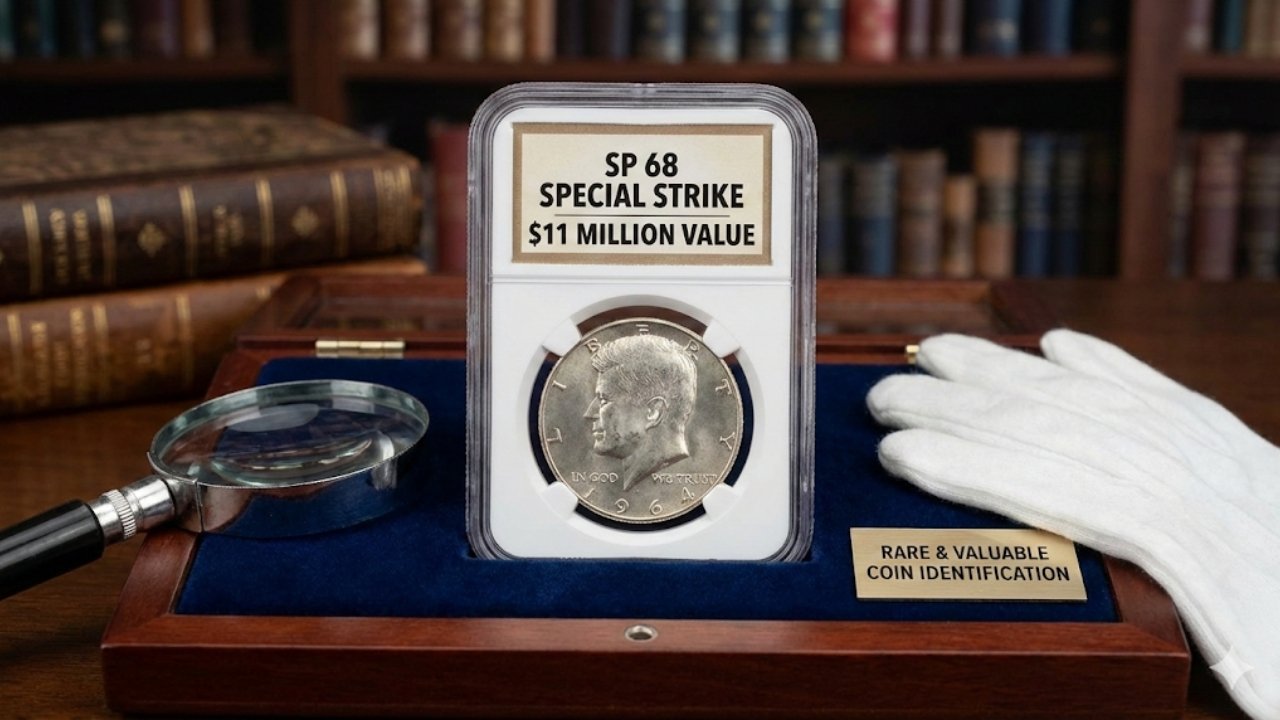

The Kennedy half dollar stands as a timeless piece of American numismatic history, introduced in 1964 just months after President John F. Kennedy’s assassination. This 50-cent coin blended tradition with tribute, featuring Kennedy’s profile on the obverse and the presidential seal on the reverse. While billions entered circulation, most now fetch face value, but a select few rarities command fortunes, including whispers of one appraised at $11 million due to its unparalleled scarcity and pristine state. Collectors scour attics and jars, dreaming of unearthing such gems.
A Storied Beginning
Minted initially in 90% silver to honor a fallen leader, the Kennedy half dollar captured national mourning and pride. Chief Engraver Gilroy Roberts crafted the obverse portrait, showing Kennedy facing right with flowing hair and a resolute gaze, while Frank Gasparro designed the reverse with a modified presidential coat of arms. Production soared that first year at over 277 million pieces from Philadelphia and Denver mints. The shift to 40% silver in 1965, then clad copper-nickel in 1971, marked evolving metal values and public hoarding, pulling silver coins from everyday use.
Rarity Fuels Sky-High Values
What elevates a common Kennedy half to treasure status? Rarity stems from low mintages, striking errors, or experimental strikes never released for circulation. The fabled $11 million coin reportedly ties to a 1969-S doubled die obverse prototype, where design elements like lettering doubled dramatically due to hubbing mishaps. Such anomalies, combined with gem uncirculated or proof grades, ignite bidding wars. Auction houses like Heritage routinely see these climb past six figures, with condition grading via PCGS or NGC slabs proving pivotal—MS-68 or higher often triples worth.
Spotting the Prize Possessions
Identifying valuables starts with basics: check the date, mint mark (tiny D, S, or none under Kennedy’s neck), and edge for silver content—solid silver shows a gleam, unlike clad’s orange tint. Tilt under light for doubled dies: fuzzy or split letters on “LIBERTY” or “IN GOD WE TRUST” signal errors. Proof coins from San Francisco bear frosty devices against mirrored fields; matte proofs like 1998-S shine subtly. Avoid cleaned or scratched pieces, as toning patina boosts appeal. Tools like a 10x loupe reveal clashes or off-centers, where images overlap or strike misses center.
Value Breakdown Table
| Variety | Mint | Composition | Circulated Value | MS/PR Value | Key Trait |
|---|---|---|---|---|---|
| 1964 Proof Accented Hair | P/S | 90% Silver | $25–$50 | $5,000–$50,000 | Extra hairline detail |
| 1970-D Low Mintage | D | 40% Silver | $50–$100 | $10,000+ | Final silver year, scarce |
| 1969-S Doubled Die | S | 40% Silver | N/A | $100,000–$11M | Extreme doubling error |
| 1998-S Matte Proof | S | Clad | $10–$20 | $1,000–$5,000 | Limited frosted finish |
| Off-Center Strike Errors | Var | Silver/Clad | $500–$5,000 | $20,000+ | 10–50% off-center |
This table highlights standout types, with the doubled die anomaly linked to mega valuations.
Error Coins: Jackpots in Jars
Minting blunders turn routine coins into windfalls. Double strikes imprint twice, ghosting features; broadstrikes bulge edges sans collar restraint. A 1970-D, withheld from circulation due to planchet shortages, routinely hits $15,000 in high grades. Everyday finds like filled dies—where grease clogs motifs—or wrong planchet strikes (half dollar on dime blank) fetch thousands. Recent eBay sales confirm: a modest 1964 error topped $8,000. Scrutinize family heirlooms; even circulated silver melts above $10 amid bullion spikes.
Grading and Market Trends
Professional grading authenticates and skyrockets resale. Submit suspects to PCGS or NGC for encapsulation; a green bean (MS-65+) versus raw coin differs by orders of magnitude. Demand surges for silver dates (1964–1970), proofs, and Kennedy’s 100th anniversary 2017 issues. Online forums buzz with $11 million hype, though experts peg top sales around $500,000—yet prototypes evade public record, fueling lore. Values climb 10–20% yearly, per Red Book guides, as baby boomers downsize estates.
Preserving Your Discovery
Found a suspect? Store in albums away from air, avoiding flips that react with PVC. Consult local dealers or apps like PCGS CoinFacts for comps before selling. Auctions via Stack’s Bowers maximize returns for rarities. Whether a $10 silver round or million-dollar unicorn, these coins weave personal stories into national legacy.
FAQs
Q: Are all 1964 Kennedy halves silver?
A: Yes, fully 90% silver; test with a magnet or ice melt.
Q: How to confirm doubled die?
A: Magnify obverse lettering for clear doubling, not just wear.
Q: Where to sell high-value finds?
A: Certified auctions or reputable dealers for best prices.
Disclaimer
The content is intended for informational purposes only. You can check official sources; our aim is to provide accurate information to all users.
