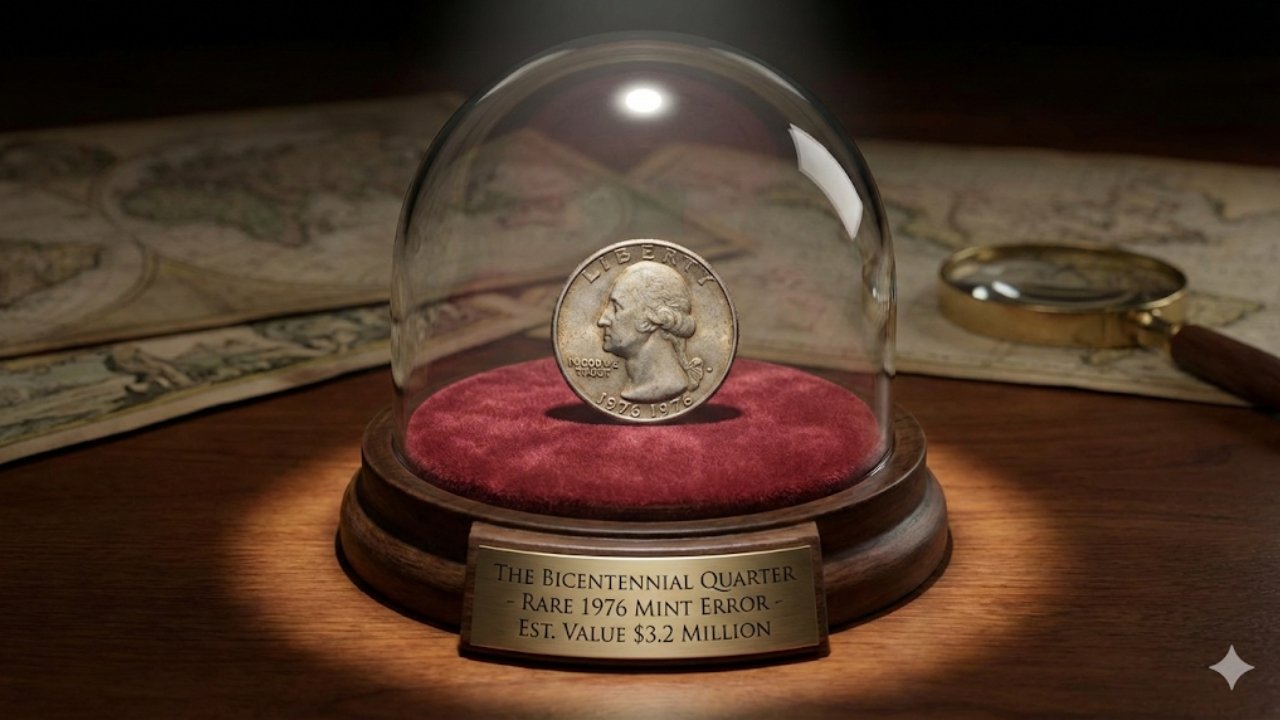

The 1976 Bicentennial Quarter captures a slice of American history in a single coin. Minted to celebrate the nation’s 200th birthday, it sparks endless curiosity among collectors about hidden treasures worth millions.
A Historic Design Unveiled
Crafted in 1975 and 1976, the Bicentennial Quarter swapped its usual eagle reverse for a lively scene of a drummer boy marching forward. This design by artist Jack L. Ahr evoked the revolutionary spirit, paired with George Washington’s portrait on the front bearing the dual date 1776-1976. Produced in massive quantities at Philadelphia, Denver, and San Francisco mints, over 1.6 billion circulated widely, making most examples common pocket change today. Yet this abundance hides rarities that turn everyday finds into fortunes.
Rumors of a $3.2 Million Prize
Whispers of a 1976 quarter fetching $3.2 million fuel dreams across coin forums and social media. Such a price tag likely ties to an ultra-rare error coin, perhaps a double-struck die or off-center strike preserved in pristine condition. While no verified sale hits exactly that figure, auction records show top Bicentennial pieces climbing into six figures, like silver proofs graded MS70 exceeding $10,000. The hype stems from modern coins occasionally shattering expectations, much like the 1955 Double Die Lincoln penny that soared past $1 million despite its youth.
Key Features of Valuable Specimens
Scarcity drives value in these quarters. Philadelphia coins lack a mint mark, Denver shows a subtle “D,” and San Francisco’s “S” denotes proofs often struck in 40% silver. High-grade uncirculated examples or those with vibrant toning command premiums, but true jackpots involve mint errors such as missing clad layers revealing copper cores.
| Rarity Type | Description | Estimated Value Range |
|---|---|---|
| Silver Proof (S) | Clad or 40% silver, perfect surfaces | $20–$5,000 |
| MS67+ Circulation Strike | Gem uncirculated, no wear | $100–$2,500 |
| Major Die Error (Double Die) | Doubling on dates/letters | $1,000–$50,000+ |
| Off-Center Strike | 50%+ misalignment | $500–$25,000 |
| Full Missing Clad | Copper core exposed | $5,000–$100,000 |
This table highlights why scrutinizing your change pays off—errors happen more often than collectors realize.
Spotting the Secrets in Your Wallet
Examine edges for copper peeking through worn cladding, a flaw from imperfect bonding during minting. Tilt under light for doubled edges on “1776-1976” or the drummer’s contours, signaling die shifts. Freshly circulated coins in MS65 or better shine with original luster, unlike scrubbed fakes dulling details. Tools like a 10x loupe reveal these clues, but authentication by PCGS or NGC slabs skyrockets worth. In 2026, with President Trump’s economy buzzing, more folks scour jars for these overlooked gems.
Why the Hype Persists Today
Coin collecting surges amid economic flux, drawing beginners to accessible quarters over dusty rarities. Online marketplaces buzz with Bicentennial sales, from $1 junkers to certified beauties at $500 apiece. The $3.2 million rumor, though unproven, mirrors real escalations—like a 1970-S quarter variant topping $50,000—keeping hope alive. Community events and apps amplify shares of “finds,” blending nostalgia with profit potential.
Collecting Tips for Beginners
Start with rolls from banks, hunting “S” proofs amid clad masses. Store in albums away from air to preserve luster, avoiding PVC flips that trap corrosive gases. Join forums like CoinTalk for free grading advice before professional submission, which costs $20–$50 per coin. Patience yields results; many million-dollar stories began with a hunch at face value.
The Thrill of the Hunt
Beyond dollars, these quarters connect us to 1776’s defiance. Whether the $3.2 million legend proves true or not, it reminds us value hides in plain sight. Dive into your spares—history might reward the curious.
FAQs
Is the $3.2 million quarter real?
No confirmed sale exists, but similar errors fetch high sums.
How do I check my quarter?
Look for errors with magnification; grade via PCGS for value.
Are all 1976 quarters valuable?
Most are worth 25 cents; rarities shine through condition or flaws.
Disclaimer
The content is intended for informational purposes only. You can check official sources; our aim is to provide accurate information to all users.
